
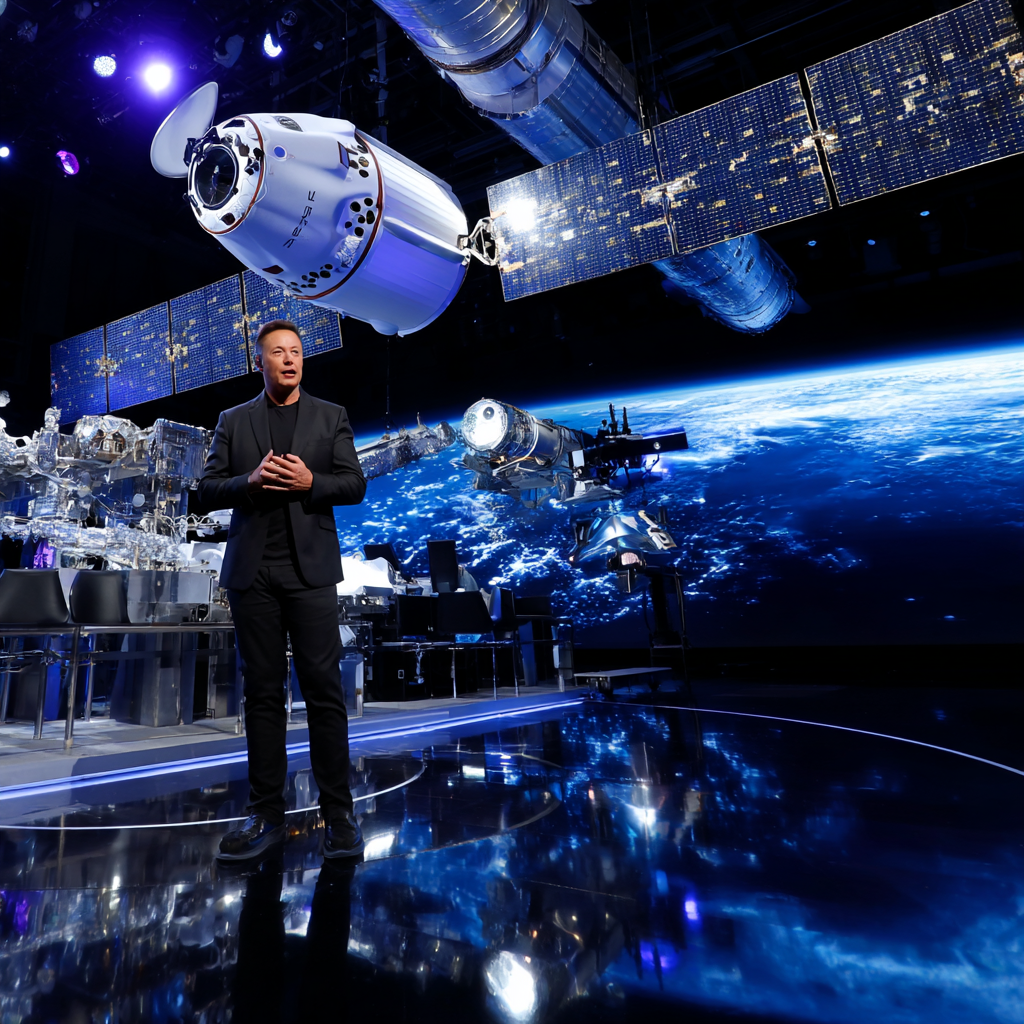
SpaceX Verizon Acquisition Speculation | What the Rumors Really Mean
Introduction
The SpaceX Verizon acquisition speculation has attracted attention across the technology and telecommunications industries. As SpaceX continues expanding Starlink from satellite internet into mobile connectivity, questions have emerged about whether the company could eventually seek a much larger position in the U.S. wireless market.
Verizon is one of the biggest telecommunications companies in the United States, while SpaceX has built one of the world’s largest satellite networks through Starlink. Bringing these two businesses together would be an extraordinary development, but it is important to separate confirmed information from market rumors and speculation.
At present, the idea of SpaceX acquiring Verizon should be treated as speculation rather than an announced transaction. The more concrete story is SpaceX’s growing interest in wireless spectrum, direct-to-device satellite connectivity, and a broader Starlink mobile strategy.
What Is the SpaceX Verizon Acquisition Speculation?
The phrase SpaceX Verizon acquisition speculation refers to reports and market discussions suggesting that SpaceX could potentially pursue a major U.S. wireless carrier, including Verizon, as it expands its mobile ambitions.
The theory is relatively straightforward.
SpaceX already has a powerful satellite infrastructure through Starlink. Verizon, meanwhile, has a huge terrestrial wireless network, spectrum assets, customers, retail operations, and telecommunications infrastructure.
Combining those capabilities could theoretically create a hybrid connectivity company capable of offering both satellite and traditional cellular services.
However, there is a major difference between saying that such a combination could make strategic sense and saying that SpaceX is actually buying Verizon.
Those are two very different claims.
Why SpaceX Is Expanding Beyond Satellite Internet
Starlink originally became popular because it provided high-speed internet in areas where conventional broadband was difficult to install.
Its low-Earth-orbit satellite network changed the economics of satellite internet by using a large constellation of relatively low-altitude satellites.
SpaceX’s ambitions have now expanded.
The company has been developing technology that can connect compatible mobile devices through satellites. This direct-to-device approach could provide connectivity in areas where traditional cell towers are unavailable.
That creates a much larger opportunity.
Instead of Starlink being viewed only as a satellite broadband provider, it could become part of a broader communications ecosystem involving:
- Satellite internet
- Mobile connectivity
- Wireless spectrum
- Direct-to-device communications
- Terrestrial networks
- Enterprise connectivity
- Emergency communications
This expansion is one of the main reasons analysts and industry observers are discussing SpaceX’s potential relationship with traditional telecom companies.
Read Must:DJI Drone Ban Concerns | Understand the Future of DJI Drones
Why Verizon Is Mentioned
Verizon naturally attracts attention whenever the future of U.S. wireless communications is discussed.
The company has a massive existing customer base and operates extensive cellular infrastructure across the United States.
For SpaceX, acquiring an established carrier could theoretically provide access to assets that would otherwise take many years to build.
These could include:
- Wireless spectrum
- Cell sites
- Network infrastructure
- Enterprise customers
- Consumer subscribers
- Distribution channels
- Established billing systems
- Telecommunications expertise
From a purely hypothetical perspective, combining Starlink’s satellite capabilities with a major terrestrial wireless network could create an unusual communications platform.
But acquiring Verizon would also introduce enormous challenges.
SpaceX and Verizon Have Different Strengths
The two companies have developed very different technological foundations.
| Feature | SpaceX / Starlink | Verizon |
|---|---|---|
| Primary technology | Low-Earth-orbit satellites | Terrestrial cellular networks |
| Core business | Space and satellite connectivity | Telecommunications |
| Major advantage | Broad satellite coverage | Established wireless infrastructure |
| Mobile opportunity | Direct-to-device connectivity | Existing cellular service |
| Infrastructure | Satellites and ground stations | Towers, fiber and cellular infrastructure |
| Customer base | Starlink broadband users | Large wireless customer base |
| Industry focus | Aerospace and connectivity | Wireless and telecommunications |
This difference is important because it explains why the idea receives attention while also showing why an acquisition would be complicated.
SpaceX would not simply be purchasing another technology company. It would potentially be combining an aerospace and satellite operation with one of America’s largest telecommunications businesses.
Starlink’s Growing Mobile Ambitions
The biggest development behind the current speculation is not necessarily Verizon itself. It is Starlink’s evolving mobile strategy.
SpaceX has been working toward satellite-to-phone connectivity that can extend communications beyond the traditional cellular network.
The concept is particularly useful in rural and remote areas.
Imagine a user traveling through a location where there is no nearby cellular tower. Instead of losing connectivity completely, a compatible phone could potentially communicate through a satellite.
This could have applications in:
- Rural communities
- Highways
- Remote work sites
- Maritime travel
- Disaster zones
- Outdoor recreation
- Emergency communications
As this technology develops, the distinction between satellite communication and mobile communication becomes less obvious.
Spectrum Could Be More Important Than an Acquisition
One of the most important parts of SpaceX’s wireless strategy is spectrum.
Wireless networks depend on radio frequencies to transmit information between devices and network infrastructure. Companies with useful spectrum holdings have an important resource that cannot simply be created whenever needed.
SpaceX has therefore shown interest in acquiring additional wireless spectrum.
This creates another possible path for Starlink.
Instead of purchasing an entire telecommunications company, SpaceX could gradually acquire spectrum, build supporting infrastructure, develop its satellite technology, and establish partnerships with existing carriers.
That approach could allow the company to expand its wireless business without taking on the enormous complexity of a full telecom acquisition.
What Would Happen If SpaceX Actually Bought Verizon?
A hypothetical SpaceX-Verizon acquisition would be one of the most significant deals in the telecommunications industry.
The combined company could potentially integrate:
Starlink satellites + Verizon cellular infrastructure + wireless spectrum + consumer mobile services
Such a combination could create a powerful hybrid network.
Customers might eventually be able to move between terrestrial cellular coverage and satellite connectivity with less dependence on traditional network boundaries.
However, this is a hypothetical scenario rather than a confirmed product roadmap.
A transaction would also require extensive regulatory review.
Regulatory Challenges Would Be Significant
A major acquisition involving Verizon would likely receive intense scrutiny from U.S. regulators.
Several issues could become important.
Competition
Authorities would need to examine whether combining two major communications businesses could reduce competition.
Spectrum Concentration
Wireless spectrum is a limited and highly regulated resource. Regulators would examine how spectrum holdings would change after a transaction.
Consumer Impact
Officials could consider whether the deal would increase or decrease choices, prices, coverage, and service quality for consumers.
National Security
Because telecommunications networks are critical infrastructure, national security considerations could also become relevant.
Market Concentration
The U.S. wireless market already contains several major operators. A large acquisition could significantly change the competitive structure of the industry.
These factors would make a SpaceX-Verizon transaction substantially more complicated than a typical technology acquisition.
Could SpaceX Build Its Own Wireless Network?
Yes, and this may be one of the most interesting alternatives.
SpaceX does not necessarily need to purchase Verizon to become a significant participant in wireless communications.
The company could continue developing its network through a combination of:
- Starlink satellites
- Direct-to-device technology
- Wireless spectrum acquisitions
- Terrestrial infrastructure
- Network partnerships
- Mobile service plans
- Enterprise connectivity
This strategy would take time, but it could allow SpaceX to develop its own telecommunications ecosystem.
It would also fit with the company’s history of building infrastructure rather than relying exclusively on existing systems.
What Could This Mean for Verizon?
The growth of Starlink’s mobile ambitions could create both competitive pressure and partnership opportunities for traditional telecom operators.
Verizon could potentially continue strengthening its own network while using satellite technology through partnerships.
Satellite connectivity could complement terrestrial networks rather than completely replace them.
For example, a conventional mobile network is highly effective in cities and populated areas where towers and fiber infrastructure are available. Satellites can be particularly useful where terrestrial infrastructure is difficult or expensive to deploy.
This suggests that future connectivity may involve a combination of technologies rather than one network replacing another.
SpaceX Verizon Acquisition vs. Partnership
There is another possibility that receives less attention: cooperation.
SpaceX does not necessarily have to own a telecommunications company to work with one.
A partnership could allow:
- Satellite connectivity for existing customers
- Emergency communication services
- Rural coverage expansion
- Roaming arrangements
- Direct-to-device services
- Enterprise connectivity
Partnerships can also be less complex than acquisitions because the companies remain independent while combining specific capabilities.
The future relationship between satellite providers and wireless carriers could therefore involve a mixture of competition and cooperation.
What Consumers Should Watch
For consumers, the most meaningful developments will not necessarily be rumors about an acquisition.
Instead, watch for concrete announcements involving:
- New Starlink mobile plans
- Additional spectrum purchases
- Direct-to-device availability
- Compatible smartphones
- Carrier partnerships
- Satellite coverage improvements
- Regulatory approvals
- New terrestrial network investments
These developments will provide a much clearer picture of SpaceX’s long-term wireless strategy.

Read Must:Discord Increased API Error| Everything You Need to Know
Frequently Asked Questions
Is SpaceX buying Verizon?
There is no confirmed SpaceX acquisition of Verizon. The idea is part of broader market speculation surrounding SpaceX’s expanding wireless ambitions.
Why would SpaceX want Verizon?
A hypothetical acquisition could provide SpaceX with established wireless infrastructure, spectrum, customers, and operational capabilities. However, SpaceX has other ways to expand its wireless business.
Is Starlink becoming a mobile phone service?
SpaceX has been developing direct-to-device satellite connectivity and expanding Starlink’s role in mobile communications. The company’s strategy is increasingly broader than traditional satellite broadband.
Could Starlink replace Verizon?
Starlink and Verizon use different types of network infrastructure. Satellite and terrestrial networks can also complement each other, particularly when serving different geographic environments.
What is the biggest challenge with a SpaceX-Verizon acquisition?
The transaction would face major financial, operational, regulatory, competition, and spectrum-related challenges.
Is the SpaceX Verizon acquisition confirmed?
No. The acquisition should currently be described as speculation rather than a confirmed transaction.
Key Takeaways
- SpaceX Verizon acquisition speculation is connected to SpaceX’s expanding wireless ambitions.
- There is no confirmed acquisition announcement establishing that SpaceX is buying Verizon.
- Starlink is developing beyond traditional satellite broadband.
- Direct-to-device connectivity could make satellite technology increasingly relevant to mobile communications.
- Wireless spectrum is an important part of SpaceX’s strategy.
- Buying Verizon would provide significant assets but would also create major regulatory and financial challenges.
- SpaceX could pursue wireless growth without purchasing a major carrier.
- Partnerships between satellite companies and traditional carriers may remain an important part of the telecommunications industry.
Conclusion
The SpaceX Verizon acquisition speculation highlights a much bigger trend in the communications industry: the growing convergence of satellite and terrestrial wireless networks.
SpaceX has already built an enormous satellite infrastructure through Starlink and is continuing to explore ways to expand its role in mobile connectivity. Verizon, meanwhile, remains a major traditional wireless operator with extensive network infrastructure and spectrum resources.
Whether SpaceX eventually pursues an acquisition, builds more of its own wireless infrastructure, purchases additional spectrum, or works through partnerships remains a separate question from the current speculation.
For now, the clearest story is the development of Starlink’s broader communications strategy. As satellite-to-device technology, wireless spectrum, and terrestrial networks increasingly overlap, the competition and cooperation between companies such as SpaceX and Verizon could become an important part of the next phase of telecommunications.
Read More:GameStop Black Friday Deals 2026 | Best Gaming Offers to Expect



3 Comments