Muse AI | What Is It, How Does It Work, Features, Benefits, and Uses
Introduction
Artificial intelligence is changing the way people interact with technology. From answering questions and generating content to managing daily activities, AI-powered tools are becoming an important part of modern life. However, the next stage of artificial intelligence goes beyond simple conversations. New AI systems are being developed to understand user goals, perform actions, and complete complex tasks with less manual effort. Muse AI is an example of this growing development in personal AI assistance.
Muse AI is designed to make digital activities easier by helping users manage information, organize tasks, explore online services, and automate supported workflows. Instead of simply providing answers, an AI agent can work through multiple steps to help achieve a particular goal.
This technology has attracted interest because it represents a shift from traditional chatbots toward more action-oriented artificial intelligence. But what exactly is Muse AI, how does it work, and what makes it different from other AI assistants?
In this guide, we will explore Muse AI, its features, practical applications, benefits, limitations, security considerations, and potential role in the future of artificial intelligence.
Table of Contents
- What Is Muse AI?
- How Does Muse AI Work?
- Key Features of Muse AI
- What Can Muse AI Be Used For?
- Benefits of Using Muse AI
- Is Muse AI Safe?
- Muse AI vs Traditional AI Chatbots
- Limitations of Muse AI
- The Future of AI Agents
- Frequently Asked Questions
- Conclusion
What Is Muse AI?
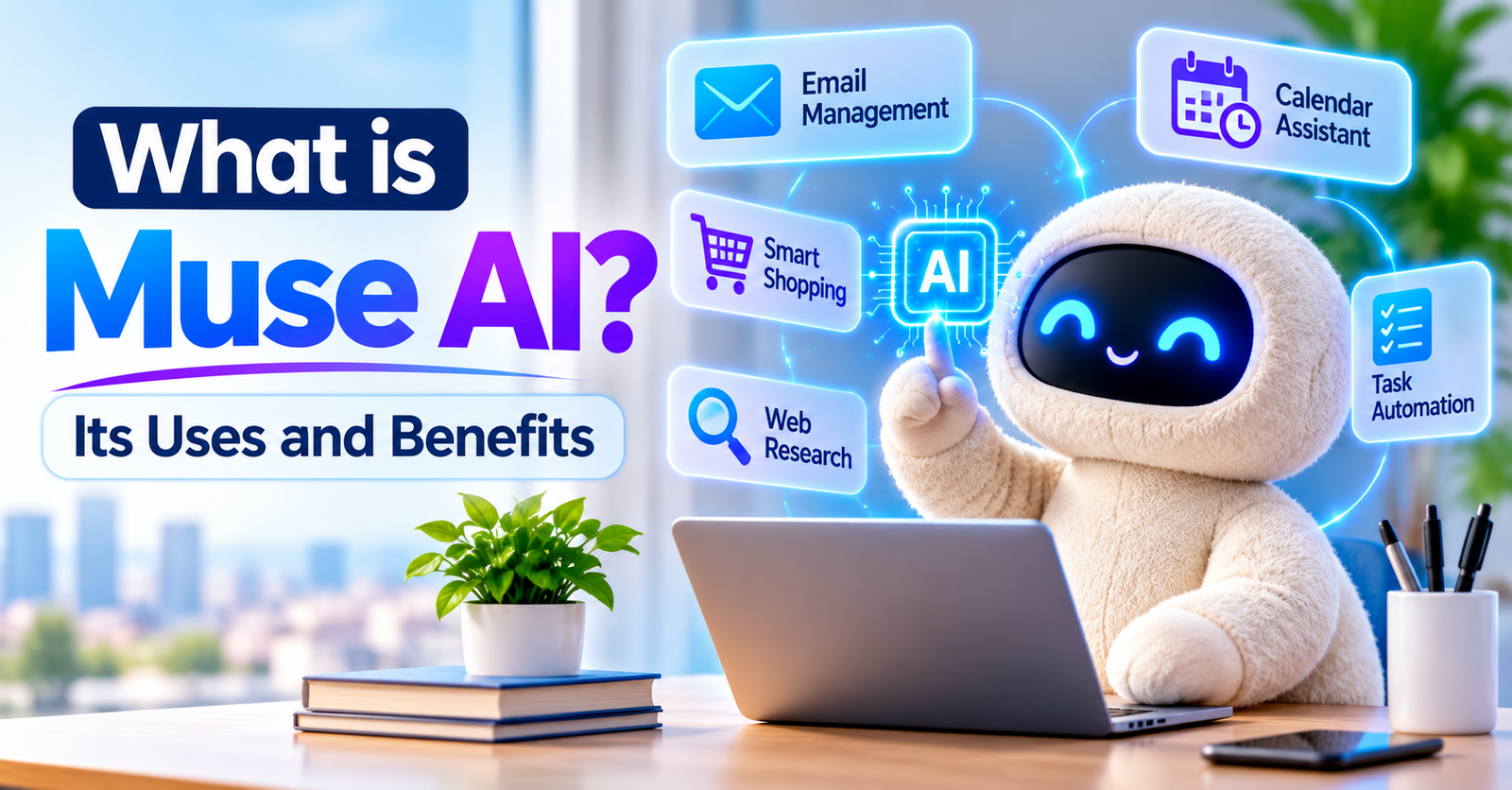
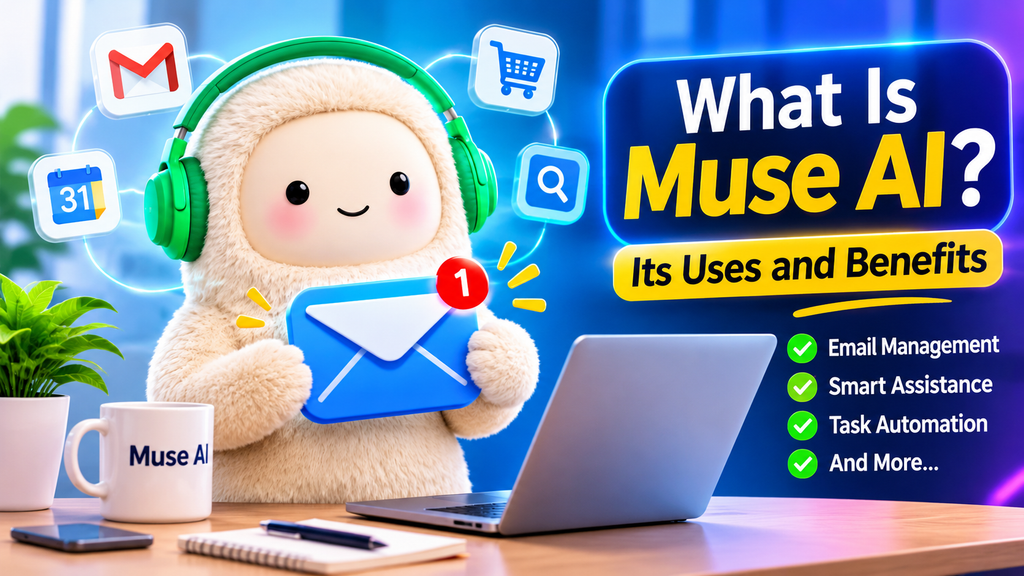
Muse AI is a name associated with artificial intelligence products and projects. In the context of Meta’s personal AI agent, Muse is designed to help users perform everyday digital activities through natural-language instructions and connected tools.
Unlike a traditional chatbot that mainly responds to questions, an AI agent is designed to take action toward a specific objective. It can understand a request, identify the steps involved, and use supported applications or services to help complete the task.
For example, a user planning a trip might ask an AI agent to research destinations, compare available options, organize travel information, and prepare an itinerary. Instead of manually completing every step, the user can delegate parts of the process to the agent.
The broader idea behind Muse AI is to make artificial intelligence more practical and useful in everyday situations.
It is important to distinguish Meta’s Muse agent from other products with similar names. Users should check the official product website to confirm which service they are accessing.
How Does Muse AI Work?
Muse AI follows the broader concept of agentic artificial intelligence. This means that the system is designed to work toward a goal rather than only generate a single response.
Its workflow can be understood through several important stages.
Understanding User Instructions
The first step is understanding what the user wants to accomplish. People can describe their requirements in natural language without needing technical commands.
For example, a user might ask an AI agent to organize a weekly schedule, research a product, or prepare a list of important tasks.
The system interprets the request and identifies the expected outcome.
Planning the Required Actions
After understanding the request, the agent determines which steps may be necessary.
A complicated task can involve multiple activities. Planning helps the system organize these activities into a logical sequence.
For example, researching a product may require identifying specifications, comparing prices, reviewing available options, and summarizing the results.
Using Connected Applications
An AI agent may use supported applications, browser tools, and external services to complete specific activities.
The available capabilities depend on the integrations and permissions provided by the platform.
These connections allow the agent to move beyond conversation and interact with digital environments.
Completing Tasks and Reviewing Results
Once the required information is collected, the agent works through the available steps.
Users should review the results and approve sensitive actions, particularly when a task involves personal information, communication, payments, or important decisions.
This combination of planning, tool usage, and user supervision is what makes agentic AI different from basic conversational systems.
Key Features of Muse AI
AI agents are becoming more capable of supporting different types of digital activities. The following features explain the main areas in which a personal AI agent such as Meta Muse is intended to provide assistance.
Personal AI Assistance
One of the main purposes of Muse AI is to provide personalized assistance.
Users can describe their goals, explain their requirements, and ask for help organizing different responsibilities.
For example, someone managing several projects might use an AI assistant to prepare a task list, organize deadlines, and identify activities that need attention.
This approach can make AI more useful for people who regularly manage multiple responsibilities.
Email and Calendar Assistance
Managing emails and schedules can consume a significant amount of time.
With appropriate integrations, an AI agent can help users organize messages, prepare responses, review calendar events, and coordinate schedules.
Some possible applications include:
- Organizing important emails.
- Preparing professional responses.
- Reviewing upcoming meetings.
- Identifying scheduling conflicts.
- Creating reminders and task lists.
- Helping organize daily activities.
Users should always review important messages before sending them.
Web Browsing and Online Research
Online research often requires visiting several websites and collecting information from different sources.
An AI agent can help simplify this process by searching for relevant information, comparing available options, and organizing findings.
For example, someone researching a new laptop could ask the agent to compare specifications, prices, and product features.
However, users should verify important information using reliable sources because AI-generated summaries may contain mistakes.
Shopping Assistance
Shopping assistance is another potential application of personal AI technology.
Users can describe what they want to purchase and provide requirements such as budget, specifications, and preferred features.
The agent can help compare available products and organize the results.
For example, someone looking for a smartphone might request a comparison of battery capacity, camera quality, storage, and price.
Any purchase should be reviewed and authorized by the user.
Task Automation
Automation allows AI agents to handle repetitive activities that would otherwise require manual effort.
Depending on the available integrations, an agent may help organize information, navigate websites, prepare documents, and complete supported online workflows.
This can be useful for individuals and businesses that regularly perform similar activities.
Read More: Hippocratic AI| How Artificial Intelligence Is Transforming Healthcare
What Can Muse AI Be Used For?
The practical value of AI agents depends on the tasks they can support. Their applications can extend across education, professional work, business operations, and personal productivity.
Muse AI for Students
Students often need to manage assignments, research projects, study schedules, and examination preparation.
An AI assistant can help organize these activities by preparing study plans, creating task lists, and summarizing learning materials.
Students can also use AI tools to understand difficult topics and organize research information.
However, AI-generated academic content should be checked for accuracy, and students should follow their institution’s academic policies.
Muse AI for Professionals
Professionals frequently manage meetings, emails, projects, and deadlines.
An AI agent can help organize these responsibilities and reduce time spent on repetitive administrative activities.
For example, a professional could ask an assistant to prepare a meeting checklist, organize project tasks, or draft a follow-up message.
This can help improve productivity when combined with proper human supervision.
Muse AI for Small Businesses
Small businesses often have limited resources and employees who handle several responsibilities.
AI agents may help with research, administrative planning, information organization, and repetitive digital workflows.
A business owner could use AI assistance to prepare marketing research, organize customer inquiries, or create a structured weekly work plan.
Sensitive customer information and financial decisions should always receive appropriate human oversight.
Muse AI for Everyday Users
Personal AI assistance is not limited to businesses or professionals.
Everyday users may benefit from tools that help organize shopping lists, plan trips, manage schedules, and keep track of important activities.
The goal is to make technology easier to use by allowing people to communicate their needs through simple instructions.
Read More: Edge Surf| Everything You Need to Know About Microsoft’s Surfing Game
Benefits of Using Muse AI
Personal AI agents offer several potential advantages when used for suitable tasks.
Time Savings: Automating repetitive activities can reduce the time spent on routine digital work.
Better Organization: AI assistance can help users organize schedules, deadlines, information, and responsibilities.
Convenience: Natural-language instructions make it easier to request help without navigating multiple tools manually.
Productivity: Professionals and business owners may use AI assistance to manage routine tasks and focus on more important work.
Personalization: AI systems can use relevant context and user preferences to provide more suitable assistance.
Multi-Step Task Support: Agentic AI can work through a sequence of activities rather than responding with a single answer.
These benefits depend on the quality of the system, available integrations, and the user’s ability to review its work.
Is Muse AI Safe to Use?
Security is an important consideration for any AI agent that interacts with personal accounts, applications, and online services.
Traditional chatbots generally provide information, while action-oriented agents may have permission to perform activities on behalf of users. This creates additional privacy and security responsibilities.
Before using any Muse AI product, users should consider the following practices:
- Check the official website before creating an account.
- Review application permissions carefully.
- Avoid sharing unnecessary sensitive information.
- Use strong and unique account passwords.
- Review actions before approving payments or messages.
- Check connected applications regularly.
- Understand how personal information is stored and processed.
If using Meta’s Muse agent, users should also review Meta’s official documentation about its security environment, data handling, and approval controls.
No AI service should be assumed to be completely risk-free. Responsible use requires understanding the permissions granted to the system.
Muse AI vs Traditional AI Chatbots
Muse AI and traditional chatbots are related to the same broader field of artificial intelligence, but their intended roles can be different.
A traditional chatbot usually focuses on answering questions, explaining information, and generating content.
An agentic AI system is designed to perform additional activities through connected tools and applications.
| Comparison | Traditional Chatbot | AI Agent |
|---|---|---|
| Answering questions | Yes | Yes |
| Content generation | Yes | Yes |
| Planning activities | Varies | Yes |
| Using external tools | Varies | Yes |
| Multi-step workflows | Limited or varies | Designed for this |
| Task automation | Depends on integrations | Core capability |
| Human approval | Depends on platform | Important for sensitive actions |
This does not mean that every AI agent is better than every chatbot. Traditional conversational tools remain useful for writing, brainstorming, explanations, and research.
The right choice depends on the user’s requirements.

Limitations of Muse AI
Although AI agents offer exciting possibilities, they also have limitations that users should understand.
Accuracy Problems
AI systems can misunderstand instructions, produce incorrect information, or make unsuitable recommendations. Important results should always be verified.
Limited Integrations
An AI agent cannot automatically access every website or application. Its capabilities depend on the services supported by the platform.
Privacy Concerns
Connecting personal accounts creates additional responsibilities. Users should understand what information is accessible and how it is processed.
Need for Human Supervision
Important financial, professional, and personal decisions should not be delegated blindly to artificial intelligence.
Availability and Access
Some features may depend on device compatibility, subscription plans, account eligibility, or regional availability.
Understanding these limitations helps users develop realistic expectations about what AI technology can accomplish.
The Future of Personal AI Agents
Artificial intelligence is moving toward systems that can understand goals and perform practical activities.
This development may change how people interact with websites, applications, and digital services.
In the future, personal AI agents could help coordinate work projects, manage online accounts, organize research, and automate repetitive activities across different platforms.
However, wider adoption will depend on more than advanced technology. Reliability, privacy, transparency, affordability, and user control will remain essential.
Muse AI is part of the broader conversation about how artificial intelligence can become a more active assistant in everyday life.
As these technologies improve, users may increasingly rely on AI agents to organize digital responsibilities while maintaining control over important decisions.
(FAQs)
What is Muse AI?
Muse AI is a name used for artificial intelligence products and projects. Meta’s Muse personal AI agent is designed to help users manage digital activities and complete supported tasks using AI-powered assistance.
What is Muse AI used for?
Depending on the specific product and its available integrations, Muse AI may help with personal assistance, task organization, online research, productivity, and digital automation.
Is Muse AI developed by Meta?
Meta has introduced a personal AI agent called Muse. However, other unrelated products also use the Muse AI name, so users should verify the exact service they are researching.
How does Muse AI work?
An agentic AI system interprets a user’s instructions, plans the required steps, uses supported tools or applications, and works toward completing the requested task.
Is Muse AI free?
Pricing depends on the particular Muse product. Users should check its official website for current free access, subscription plans, and usage limitations.
Is Muse AI safe?
Safety depends on the specific product, its security controls, and the permissions users provide. Users should review privacy policies and avoid granting unnecessary access to personal information.
Can Muse AI automate tasks?
AI agents are designed to support multi-step activities and automate certain repetitive workflows. The available tasks depend on integrations, platform capabilities, and user permissions.
What is the difference between Muse AI and a chatbot?
A traditional chatbot primarily generates conversational responses. An AI agent can also use connected tools to perform actions and complete multi-step activities.
Conclusion
Muse AI represents an interesting development in the evolution of artificial intelligence, particularly the movement from traditional chatbots toward more capable personal AI agents.
By focusing on task organization, connected applications, online research, and automation, agentic AI aims to make everyday digital activities more convenient.
Its potential applications extend across education, professional work, business operations, and personal productivity. However, accuracy, privacy, security, and human supervision remain important considerations.
As artificial intelligence continues to evolve, personal AI agents may become an increasingly important part of how people use technology. Understanding their capabilities and limitations can help users make better decisions about adopting these tools.
For anyone interested in AI technology and the future of digital productivity, Muse AI is a topic worth following.
Read Must: Seeking Alpha Deal | How to Find the Best Subscription Offers in 2026